

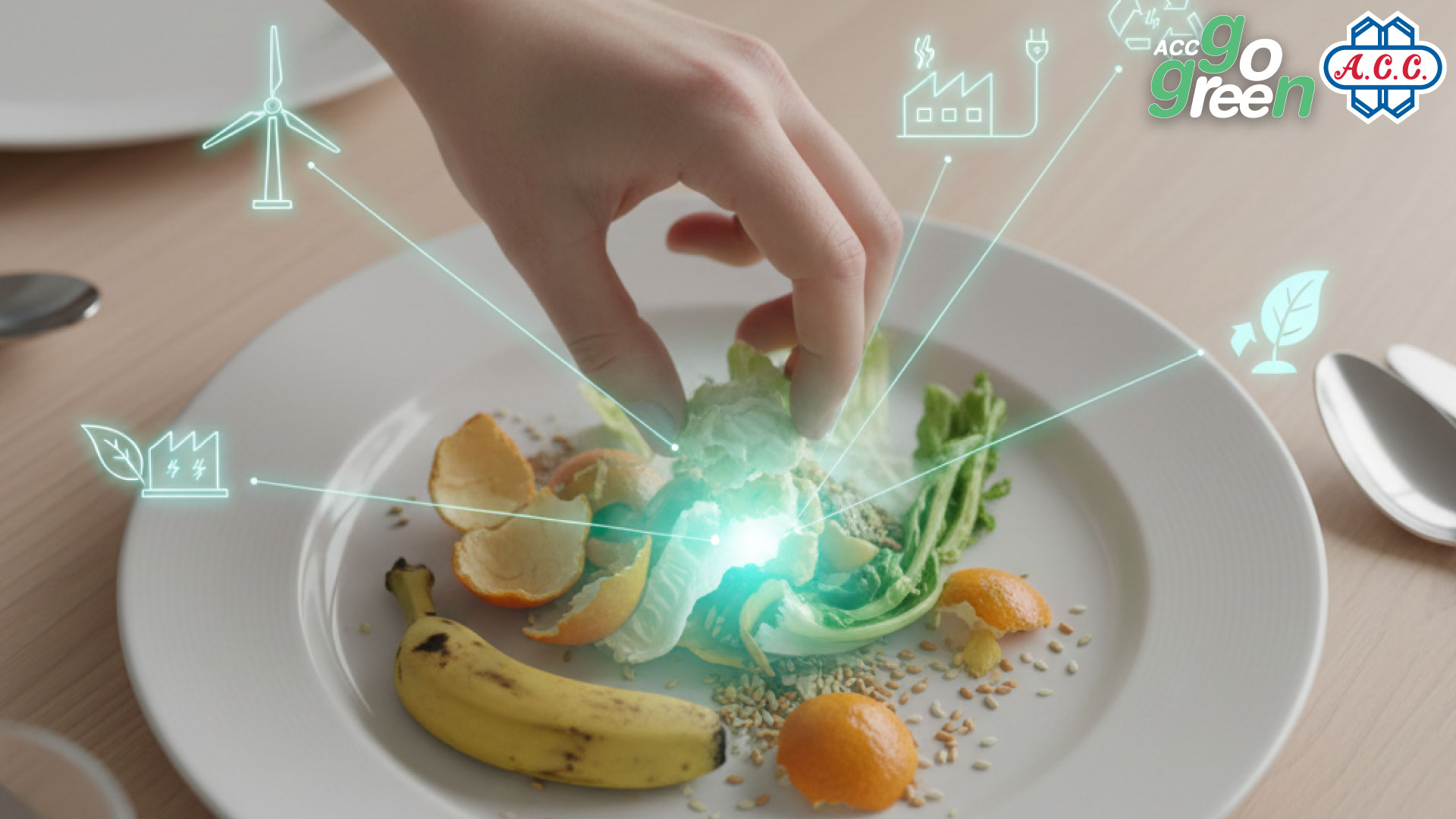
When we talk about the problem of food waste, we often think of leftovers on a plate or spoiled vegetables in the refrigerator. However, these issues are no longer confined to the household; they have become an immense burden on the waste management systems of major cities worldwide. Data from various environmental organizations consistently indicates that discarded food waste constitutes the largest proportion of all municipal solid waste, giving rise to a concerning chain of problems.
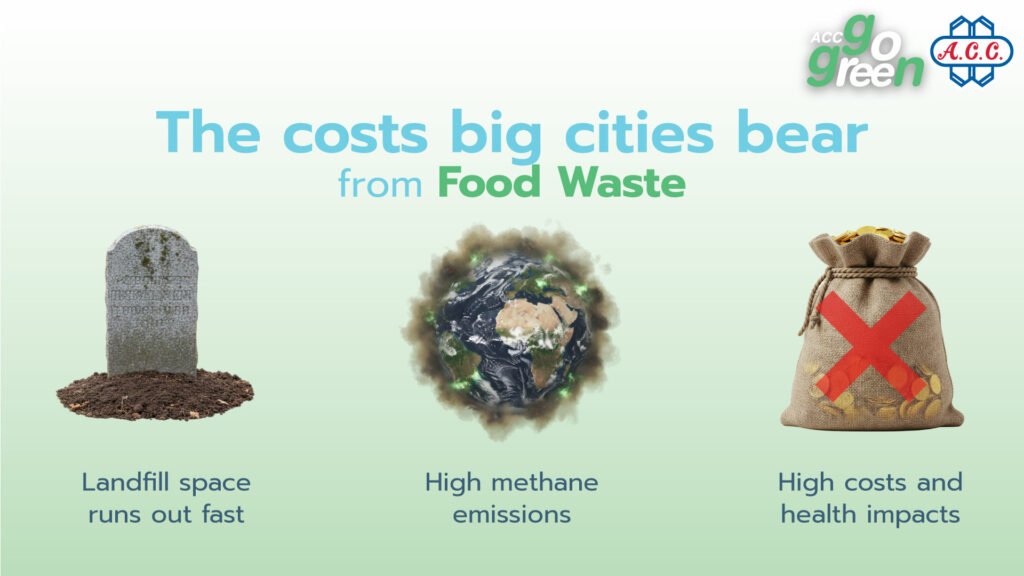
The most critical issue is the rapidly diminishing landfill space. Organic waste consumes a significant amount of management space, and when it is mixed with other waste and decomposes without control, it releases Methane—a greenhouse gas with a global warming potential tens of times higher than carbon dioxide. This process is unknowingly accelerating the global warming crisis.
Nowadays, the costs borne by large cities are not merely transportation expenses for disposal but also include health impacts on communities near landfill sites and the contamination of natural water sources by effluent. This has transformed the status of the food scraps we once overlooked from simple “wet waste” to an urgent economic and environmental threat.
 In-Depth Analysis: Sources and Volume of Organic Waste in Cities
To truly comprehend the urgency of this problem, we must delve deeper into the origins of food waste in major cities. The majority of organic waste is not solely generated by households but also comes from various other sources that produce enormous volumes. The primary sources of food waste are as follows:
- Household Waste: This is a major source, often resulting from over-purchasing ingredients, misinterpreting expiration dates, or preparing food with excessive leftovers.
- Food Industry and Processing: This waste is generated during production, including trimmings of imperfect raw materials or the expiration of inventory before reaching consumers.
- Restaurants and Hotels (Hospitality Sector): Waste is generated from food left on plates (Plate Waste) or from preparing ingredients based on fluctuating customer demand.
- Fresh Markets and Supermarkets (Retail): This is the result of fruits and vegetables that do not meet Aesthetic Standards, causing them to be discarded before the point of sale, or items approaching their expiration date.
The concentration of populations in urban areas causes the accumulated volume of food waste to multiply rapidly. Mixed Waste Management, especially the practice of sending organic waste to landfills, renders problem-solving ineffective and results in the sheer waste of valuable resources that could otherwise be recovered. Therefore, Source Separation of food waste is the single most important step in unlocking the potential of these organic materials.
Flipping the Script: From Worthless Waste to Clean Energy Source
The most exciting development in this era is the shift in perspective towards organic waste, changing it from a burden into an incredibly valuable resource. Modern technology has proven that these food scraps can truly “change roles” to become clean energy and renewable resources in astonishing ways.
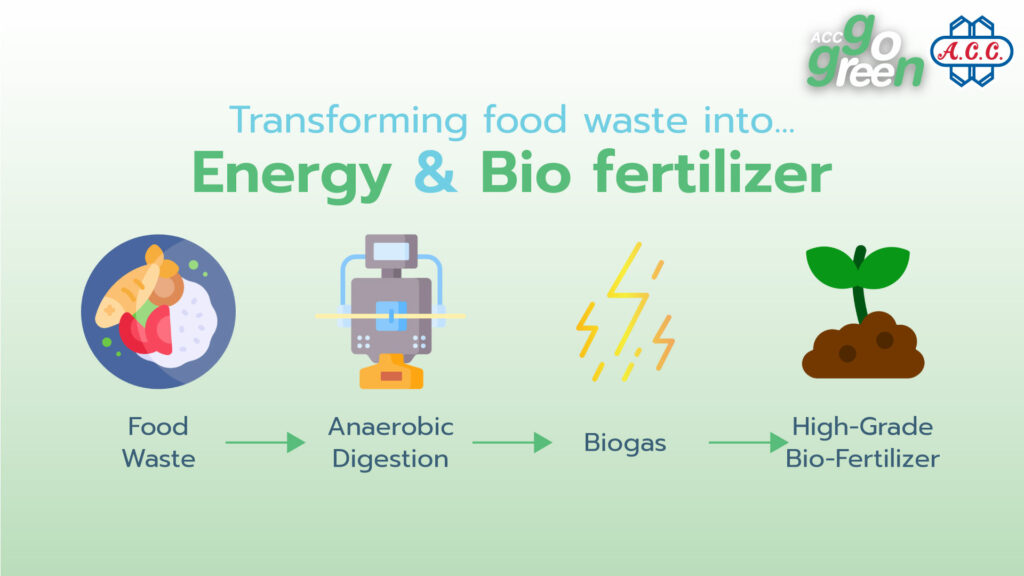
The core of this transformation is managing organic waste at the source and routing it into the Anaerobic Digestion process, an innovation that many cities worldwide are adopting as a primary solution.
-
Biogas Production: The Alternative Energy That Needs No Purchase
When food waste is fed into a sealed anaerobic digester without oxygen, a biological reaction occurs, producing Biogas. The primary components of biogas are Methane and Carbon Dioxide. The Methane produced can be immediately utilized for various purposes:
- Conversion to Electricity: It is used as fuel to generate electricity that feeds back into the city’s public utility system or powers the waste management system itself, significantly reducing the city’s energy costs.
- Cooking Gas: It can be upgraded (Upgrading) to be used as vehicle fuel (Bio-CNG) or directly for household use in surrounding communities.
Capturing Methane for utilization also significantly reduces greenhouse gas emissions into the atmosphere compared to allowing the waste to decompose in landfills. This kind of Methane Capture is considered a crucial measure in the fight against climate change.
-
Bio-Fertilizer and Soil Amendment: Restoring Life to the Earth
An equally important byproduct of the food waste digestion process is the Digestate remaining in the tank. This digestate is an organic material rich in nutrients and is far more stable than the original waste. It is therefore highly suitable for use as a bio-fertilizer or soil amendment.
Utilizing bio-fertilizer derived from food waste helps farmers and local authorities reduce their reliance on synthetic chemical fertilizers. This not only lowers costs but also improves soil structure, enhances fertility, and promotes sustainable agriculture in urban peripheries. This is a perfect example of a Circular Economy model, transforming waste back into nutrients for the production system.
 The Mechanism of Digestion Technology
To gain a deeper understanding, one should familiarize themselves with the Anaerobic Digestion process, which functions as a small-scale factory for organic waste processing. It involves complex and efficient biological steps:
- Hydrolysis: This is the first step where large organic molecules, such as proteins, fats, and carbohydrates, are broken down by bacterial enzymes into smaller molecules like amino acids and sugars.
- Acidogenesis: A second group of bacteria converts these small molecules into Volatile Fatty Acids (VFAs), such as acetic acid, along with alcohol and carbon dioxide gas.
- Acetogenesis: The volatile fatty acids are converted into Acetic Acid, which is the main precursor for Methane production.
- Methanogenesis: This is the final and most crucial step. Methanogen bacteria convert the acetic acid and remaining gases into Methane (CH4), the core component of Biogas used for energy.
The efficiency of this process depends on the control of key factors, such as temperature, pH value, and the Carbon to Nitrogen Ratio (C/N Ratio), which requires precise chemical and biological engineering expertise and knowledge.
Global Success Stories: A Profitable Business Model
Many of the world’s leading metropolises have proven that strategically managing food waste is not just an option, but a profitable and viable business model.
- San Francisco (USA): As one of the first cities to enforce strict organic waste separation laws, collected food scraps are converted into high-quality compost and biogas used for city operations, effectively reducing landfill volume to nearly zero. This system not only reduces the waste burden but also generates revenue from selling fertilizer and energy.
- Seoul (South Korea): The city implemented a fee system based on the weight of food waste discarded, automatically incentivizing households to reduce waste. The collected waste is then used for comprehensive energy production. This model effectively reduces wasteful behavior.
- Amsterdam (Netherlands): Biogas produced from organic waste powers the city’s public transport buses and garbage collection trucks, representing the true utilization of domestically produced renewable energy. This builds energy security for the city.
- Milan (Italy): The city is known for centralizing the management of organic waste to convert it into Biogas and organic fertilizer for use in farms surrounding the city. This creates a sustainable Urban-Rural Linkage within the food system.
These examples clearly show that investing in end-to-end food waste management technology significantly helps reduce budgetary burdens and simultaneously increases energy and fertilizer output for the city, proving its long-term value.
Conclusion
The problem of food waste in major cities is no longer just a waste problem; it is a monumental opportunity to unlock clean energy and create resource security for communities. Technology that converts food waste into biogas and bio-fertilizer has proven that the scraps we discard hold more value than we realize.
Systematic investment in organic waste management is an investment that yields high returns in terms of economics, environment, and society. It helps major cities reduce external energy dependency, decrease the landfill burden, and comprehensively lower greenhouse gas emissions. Furthermore, it fosters sustainable agriculture within the city’s closed loop. The time has come for all sectors to view food scraps as an “Organic Goldmine” and collaboratively transform them into the energy lifeline of future metropolises.
