

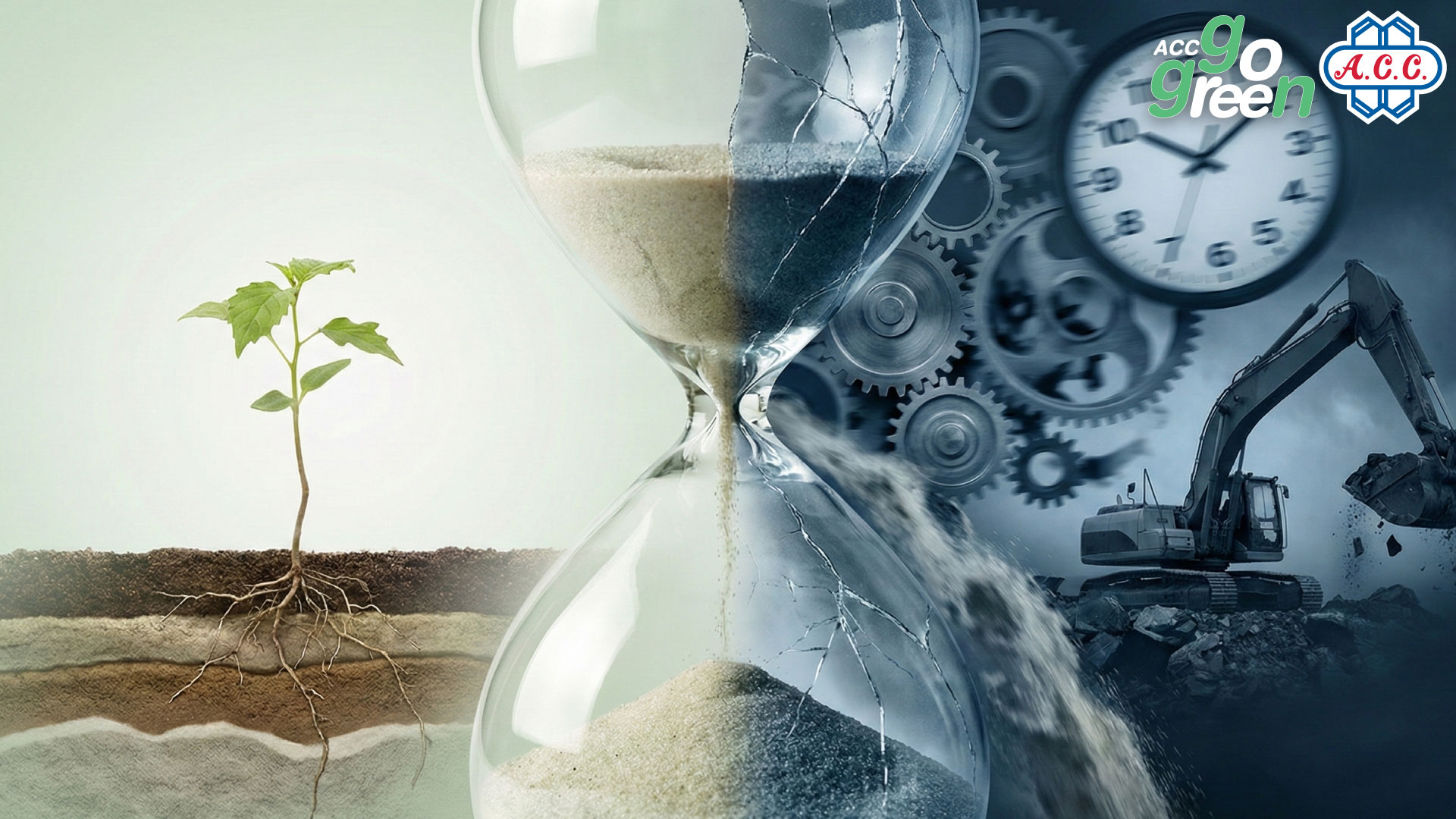
The nature we inhabit is an incredible system, filled with complex mechanisms designed for continuous self-regeneration. Every element of the world possesses an inherent potential for self-healing, whether it’s the forests that can grow back even after being burned, the water in streams that can naturally purify contaminants, or the soil that miraculously rebalances its own minerals and microbes.
This natural power of self-restoration, or Ecological Resilience, is what has helped this planet endure and adapt for billions of years. When changes or disasters occur—be it a volcanic eruption, a flood, or a wildfire—the ecosystem gradually rebuilds itself, restoring balance and transitioning back to a stable state.
However, even though nature possesses such a powerful self-healing system, the critical question is: “Is that power sufficient to cope with the acceleration of humanity?” The unfortunate answer is that the speed of natural recovery is many times slower than the rate at which humans consume and destroy resources. We are spending the planet’s credit faster than the Earth can replenish it.
When Human Speed Overtakes Nature’s Rhythm
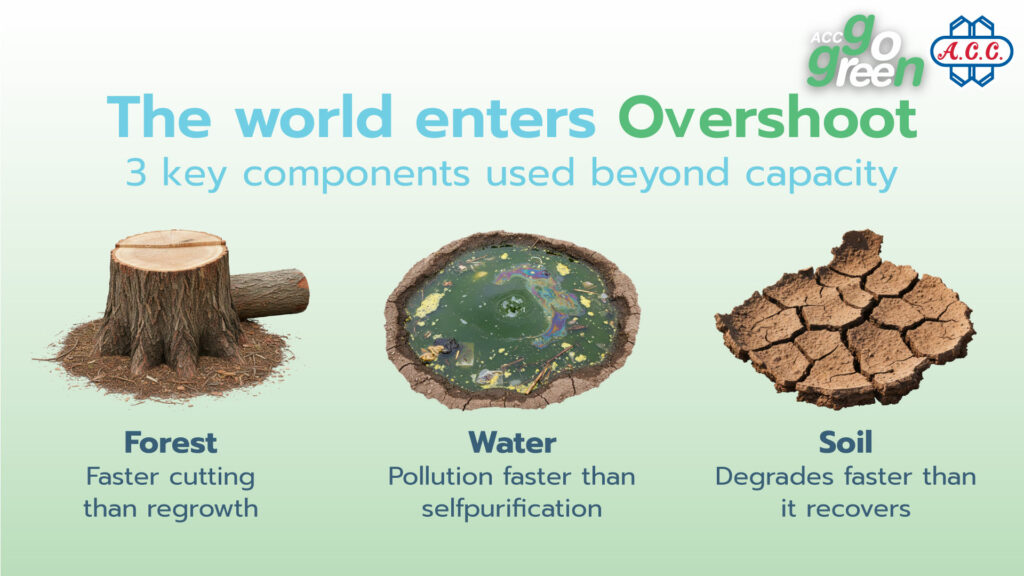
Modern humanity, particularly in the industrial and consumer sectors, has accelerated the consumption of the world’s resources to a critical point. Urban expansion, monoculture farming, and production focused on maximum profit have pushed the planet into a state of Overshoot, or a state of overutilization, especially concerning the three main components of the ecosystem:
-
The Forest and Terrestrial Ecosystems (The Forest)
- Nature’s Capacity: Forests have a remarkable process of sequential and predictable change, meaning they can regenerate naturally after destruction (such as a wildfire), starting with pioneer plants leading to the return of large trees and wildlife. This process can take decades to centuries, depending on the forest type and climate.
- Human Acceleration: We engage in Deforestation to expand agriculture and industry at a speed hundreds of times faster than natural regrowth. Statistics show that every second, we lose forest area equivalent to several football fields. Deforestation not only reduces forest land but also causes soil erosion and destroys the world’s most vital carbon sinks.
-
Water Bodies and Natural Purification Systems (The Water)
- Nature’s Capacity: Rivers, lakes, and wetlands have fascinating Self-Purification mechanisms, such as the decomposition of organic pollutants by microbes, the sedimentation of suspended solids, or the filtration of water by aquatic plants and rock layers.
- Human Acceleration: We discharge pollutants (including industrial chemicals, municipal wastewater, and agricultural fertilizers) into water sources faster than the natural self-purification system can cope. This is especially true for the release of heavy metals and Microplastics—substances that nature cannot decompose in the short term—leading to the permanent accumulation of toxins in many rivers.
-
The Soil and Mineral Cycles (The Soil)
- Nature’s Capacity: Good soil takes hundreds to thousands of years to build through the process of Weathering and the decomposition of plant and animal matter by microbes to create rich Humus (organic matter).
- Human Acceleration: Monoculture farming, coupled with heavy use of chemical fertilizers and pesticides, causes Soil Degradation faster than the soil can naturally recover. Excessive tilling destroys the soil structure, leading to a loss of water-holding capacity and carbon storage. This transforms land that was once a source of food production into merely a surface waiting for erosion.
 The Fragility Hidden within Majesty
The shocking truth is that the majesty of the ecosystem comes with a hidden fragility. Natural balance is like a domino that is ready to fall when the force applied is too great. The destruction of one forest area can affect rainfall patterns in distant regions, and even slight chemical contamination can kill the entire aquatic life system.
Our acceleration in resource consumption beyond the planet’s recovery capacity leads to a phenomenon known as the Tipping Point—a critical threshold where, once the ecosystem is destroyed to a certain level, it can no longer return to its original state, even if we stop increasing the damage. For example, the melting of the polar ice caps, once past a certain point, will lead to massive climate change that cannot be undone.
The Solution: Giving the Earth Time to Breathe Through Human Responsibility
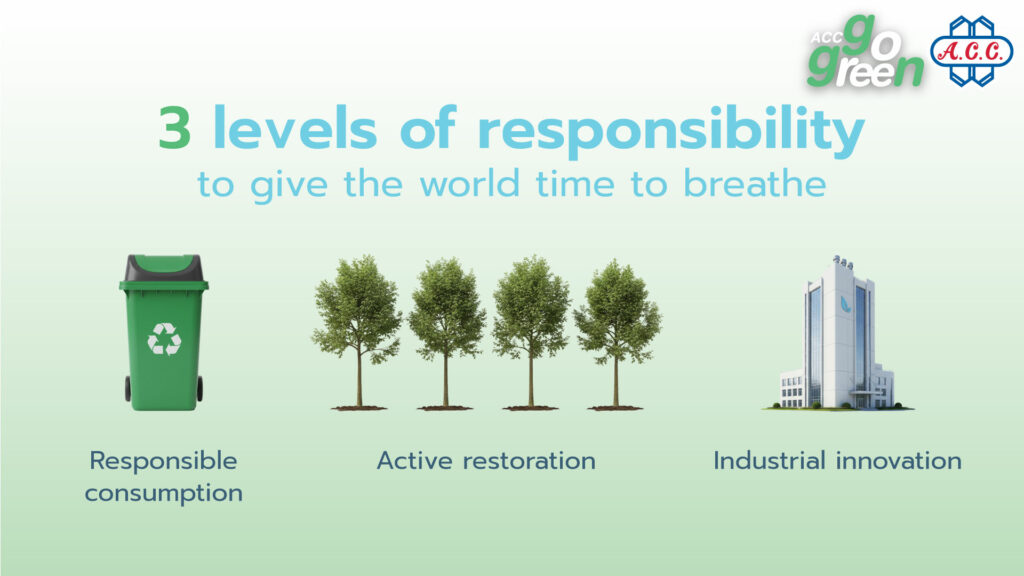
This article is not intended to encourage everyone to stop development, but to raise awareness that humans can be part of the solution to give the world’s ecosystems more time to breathe. This requires adjusting mindsets and behaviors at the individual, community, and industrial levels.
-
Responsible Consumption
- Individual Level: Start by reducing daily resource and energy use, such as minimizing waste, choosing products from sustainable production processes, reducing meat consumption which impacts forest land use, and properly separating organic waste for recycling.
-
Active Restoration
- Community Level: Participate in projects to plant forests, restore water sources, or implement Urban Greening. Educating community members about the importance of local ecosystems fosters love and preservation of resources.
-
Industrial Innovation
- Industrial Sector: This is the most crucial role in transitioning to the Circular Economy, by designing products that Reduce resource use, Reuse to extend lifespan, and Recycle effectively. This also includes investing in technology to achieve Zero Emission before discharging waste into the environment.
 Conclusion
Nature is a resilient and powerful system, but we can no longer expect it to withstand continuous destruction. The current challenge is that human speed has surpassed the world’s recovery speed.
The time has come for us to use the power of wisdom, technology, and innovation to adjust the rhythm of our lives and production to align with the world’s breathing cycle. Shifting to intelligent resource use, prioritizing the Circular Economy, and investing in green technology is not just about environmental conservation; it is about respecting the precious mechanisms of this planet, ensuring that future generations can continue to witness its beauty and abundance sustainably.